Crypteia: The Secret Service of Ancient Sparta
Source: GreekReporter.com
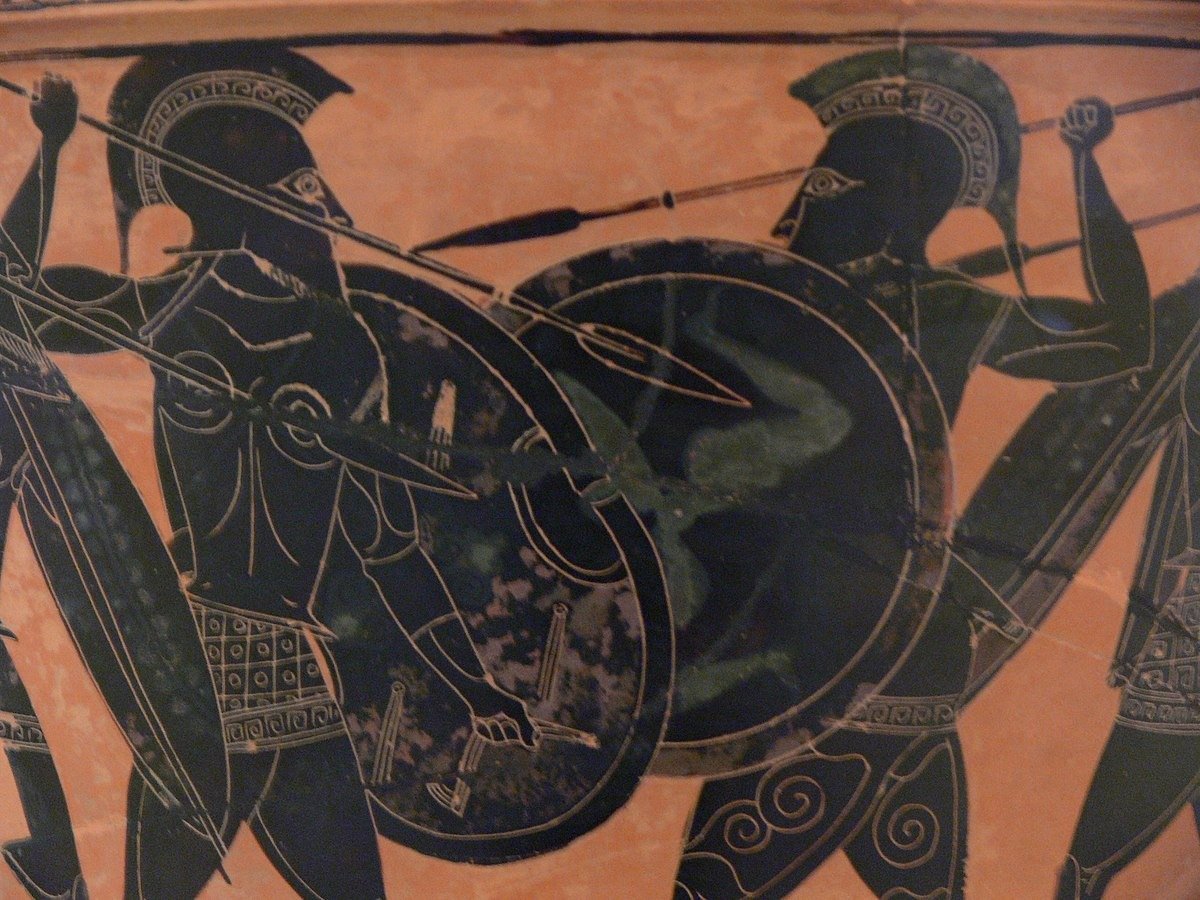
Sparta, a hardened military society, had its own secret service called the Crypteia. This was a group of men specially trained for covert operations in rural areas of the kingdom.
Crypteia, or Krypteia, derives from the word kryptos, which in Greek means “secret” or “hidden.” The men comprising the group were called kryptoi (plural of kryptos in Greek). Plutarch and Heraclides Lembus describe them as a sort of rural police with their main job being secretly monitoring the helots, the subjugated agricultural workers, and assassinating those trying to instigate upheaval.
Helots were immensely important to the economy of Sparta, as they were the producers of all agricultural goods. During wars, they fought alongside the Spartans. Their sheer numbers and difficult living conditions made them a potential threat that was too difficult to contain. Therefore, it was a chief concern for the Spartans to keep them in check so as to prevent any ptoential uprising.
In other words, Crypteia was a secret police, or secret service, with the agents operating clandestinely and moving only at night. These men carried only daggers to protect themselves.
Crypteia origin and training
The men chosen for the Crypteia were young upper-class Spartans, probably between the ages of 21 and 30. Intelligence was the most important qualification for joining this elite group. Naturally, much like all other men in Sparta, they had already undergone the agoge, the rigorous physical training all males were obligated to complete, and had excelled at it. If the additional training to become kryptoi was successful, as well, Spartan officials would identify them as future leaders.
The exact nature of this additional training remains unknown. It likely included advanced lessons in survival skills under harsh conditions, espionage techniques, and hand-to-hand combat in preparation for one-man operations, as was often the case.
In Plato’s Laws, there is a fictional dialogue of a Spartan in which he refers to the Crypteia:
“Moreover, the ‘Crypteia,’ as it is called, affords a wonderfully severe training in hardihood, as the men go bare-foot in winter and sleep without coverlets and have no attendants, but wait on themselves and rove through the whole countryside both by night and by day.”
In a 2nd-century BC fragment, the Alexandrian Heraclides Lembu mentions the Crypteia. This possibly refers to Lycurgus for its establishment:
“It is said that he…also set up the Crypteia, whereby, even to this day, men go out of the city to hide by day, and by night in arms…and slaughter helots as they think necessary.”
Based on Aristotle’s work, Plutarch attributes the Crypteia to Lycurgus, the legendary Spartan lawmaker. In Cleomenes, Plutarch refers to them as a special unit of the Spartan army.
“The Crypteia, perhaps (if it were one of Lycurgus’s ordinances, as Aristotle says it was), gave both him and Plato, too, this [negative] opinion alike of the lawgiver and his government. By this ordinance, the magistrates dispatched privately some of the ablest of the young men into the country, from time to time, armed only with their daggers, and taking a little necessary provision with them; in the daytime, they hid themselves in out-of-the-way places, and there lay close, but, in the night, issued out into the highways, and killed all the helots they could light upon; sometimes they set upon them by day, as they were at work in the fields, and murdered them.”
The mission
Most historians, ancient and modern, agree that the main mission of the elite group of Crypteia was to suppress the helots. They would secretly identify and eliminate potential leaders who could incite rebellion.
This was done in secrecy. Undercover, the young men of the Crypteia would infiltrate helot groups or whole communities to spot leaders or agitators. Then they would quietly assassinate them at night. They worked in small groups or alone, and their methods of hiding and acting swiftly along with their hand-to-hand combat skills would help them complete operations.
Rumors of the existence of such a group alone would also serve as a means for psychological warfare. Helots would be reluctant to rebel with the knowledge of such ar ruthless unit of Spartan assassins.
By the end of the 4th century BC, Sparta’s military power began waning, as did the function of the Crypteia. After a number of military defeats, its status in ancient Greece diminished. When the Thebans beat them at Leuctra and liberated the Messenian helots, there was no longer a need for the secret elite unit.
The original article: belongs to GreekReporter.com .