New Findings on the Origins of the Church of the Holy Sepulchre
Source: GreekReporter.com

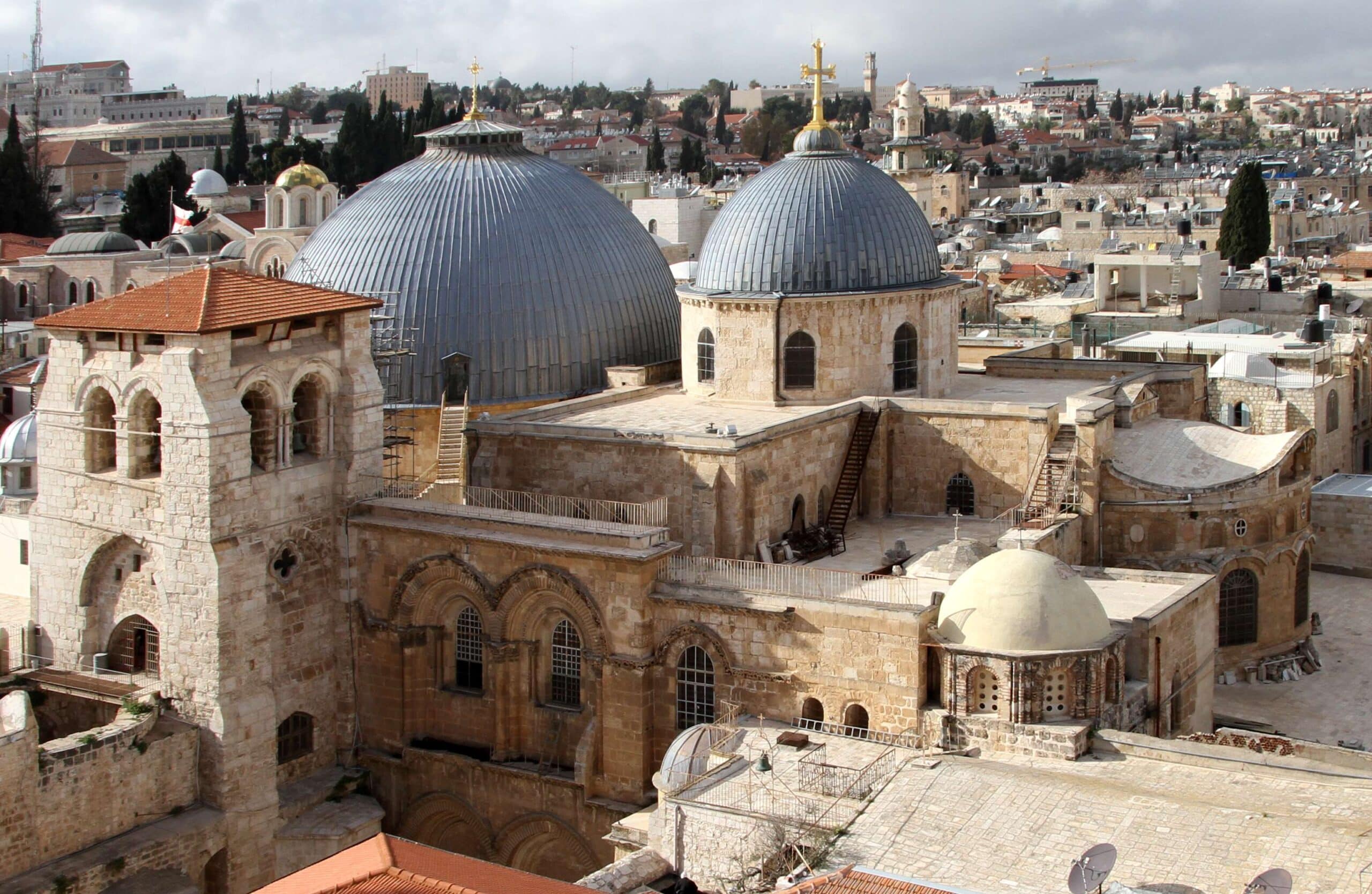
Archaeologists from Sapienza University of Rome have uncovered fascinating details about Jerusalem’s Church of the Holy Sepulchre. Situated in the Christian Quarter, this iconic site is revered as the location of Jesus’ crucifixion, burial, and resurrection, making it one of Christianity’s holiest places.
From quarry to place of worship
The church, built in the 4th century during the reign of Emperor Constantine the Great, holds deep historical and spiritual significance. Before its construction, the area had a long and varied history.
Initially, it was an ancient quarry, as evidenced by deep rock cuts and extracted stone blocks. Abandoned during the Iron Age, the quarry was later used for agriculture, with traces of olive and grape cultivation.
Jesus’ tomb
Following the siege of Jerusalem in AD 70, Emperor Hadrian founded a Roman city named Aelia Capitolina. On the former quarry site, he built a pagan temple, which remained in use until Constantine ordered its removal in the 4th century.
During this period, Bishop Macarius I of Jerusalem led an excavation that uncovered a rock-cut tomb. The bishop identified this as the burial site of Jesus, prompting Constantine to construct the Church of the Holy Sepulchre as a place of Christian worship.
Recent archaeological studies
Recent archaeological studies have revealed even more about the site’s transformation. Evidence points to a Roman cultic structure built during Hadrian’s time.
Researchers also found signs of large-scale leveling of the rocky terrain, likely to prepare the ground for monumental Roman buildings. These findings shed light on how the area evolved before becoming a sanctuary.
The sanctuary constructed by Constantine was more than a church. It was a carefully designed complex to accommodate pilgrims and religious practices. Covered walkways provided shelter, and routes allowed visitors to move easily between areas of worship.
This design reflected traditions seen in both pre-Christian and early Christian sacred sites, emphasizing its importance as a pilgrimage destination.
Greek heritage at the Holy Sepulchre
The Church of the Holy Sepulchre also holds great importance for the Greek Orthodox Church. It serves as the seat of the “Greek Orthodox Patriarchate of Jerusalem,” which plays a leading role in the site’s administration and liturgical practices.
This connection dates back to the Byzantine Empire, when Emperor Constantine and his mother, Helena, first built the church. Their influence introduced Byzantine Greek traditions that continue to shape the site’s architecture, ceremonies, and spiritual significance.
Ongoing excavations and documentation
Today, excavations continue in the church’s north aisle to further investigate the Roman cultic structure and its significance. Archaeologists are also documenting the basilica and its annexes to understand better how the site has developed over centuries.
Materials collected during the excavation are being analyzed to piece together the site’s rich history and its evolving role within Jerusalem. These discoveries deepen our understanding of the Church of the Holy Sepulchre’s remarkable past.
The original article: belongs to GreekReporter.com .