Military service: what does conscription look like across Europe?
Source: RFI – All the news from France, Europe, Africa and the rest of the world.
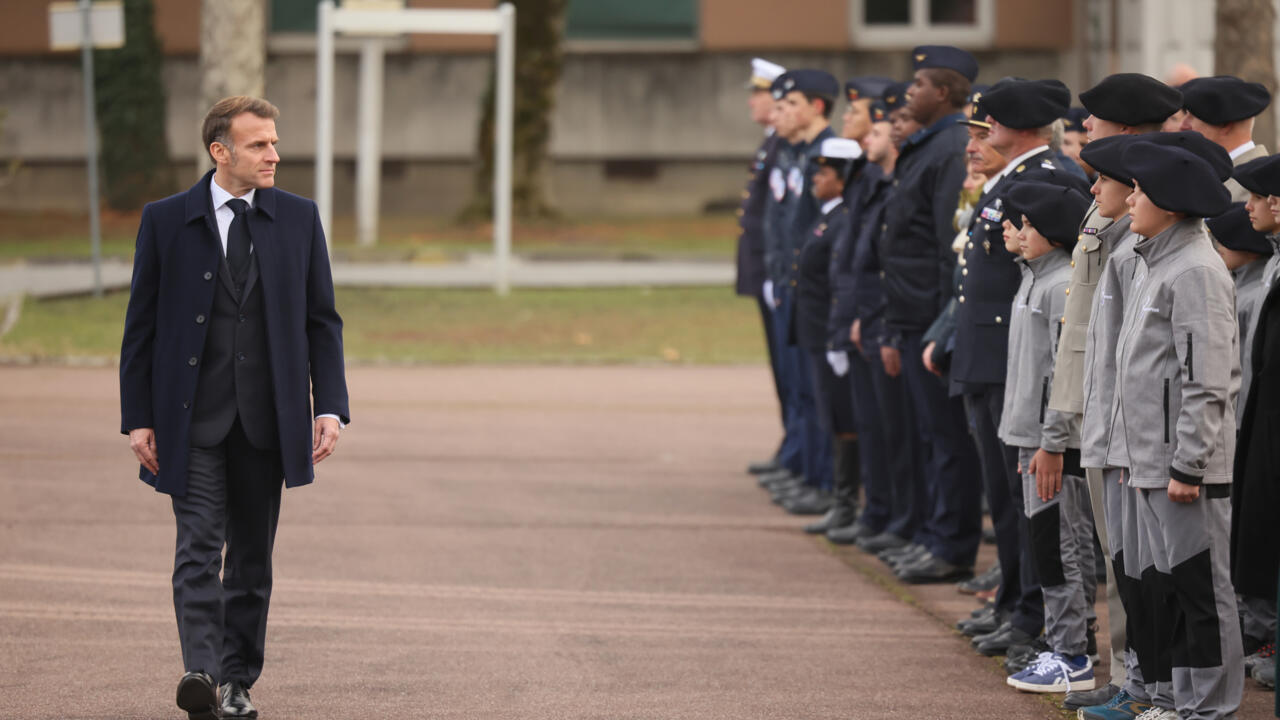
Faced with mounting security challenges, many European countries have reinstated military service, or are considering doing so. The debate has been particularly heated in France, which on Thursday announced the return of a voluntary youth military service.
Advertising
The war in Ukraine, following the Russian invasion in 2022, instability in the Middle East and uncertainty surrounding the level of United States involvement in the event of conflict have seen discussions over strengthening military capabilities arise across Europe – in terms of manpower as well as weaponry.
“Many countries in Europe are reintroducing national service,” France’s Chief of the Defence Staff, Fabien Mandon, said last week, before President Emmanuel Macron on Thursday outlined his plans for the establishment of voluntary youth military service.
“At a time when all our European allies are making progress in the face of a threat that affects us all, France cannot remain idle,” Macron said at the launch of the programme, set to begin by the middle of next year.
Macron unveils voluntary military service as concerns grow over Russia
Historical context
History is the starting point to understanding military service models, according to Stéphane Audoin-Rouzeau, historian at the School for Advanced Studies in the Social Sciences (EHESS).
“From the French Revolution onward, a very strong link was established between citizenship and bearing arms,” he told RFI. “In the 19th and 20th centuries, voting and military service went hand in hand: one was a citizen also because one participated in the defence of the nation.”
Most European states abandoned compulsory military service starting in the 1990s, Audoin-Rouzeau explained. The fading memory of two world wars, coupled with the rise of nuclear deterrence, meant that the idea of another war was more or less eliminated.
“The end of the Cold War made mass military service less necessary, in favour of a professional army made up of specialists. This was as much an economic choice as a strategic one: the increased technicality of operations required professionals.”
Hybrid solutions
France abandoned compulsory military service in 1997 under the presidency of Jacques Chirac, followed by the Netherlands the same year. Belgium had suspended conscription from 1993.
Spain followed suit in 2001, Slovenia in 2003, the Czech Republic, Slovakia, Hungary and Portugal in 2004, Italy in 2005, Romania in 2006, Bulgaria in 2007, Poland in 2009, and Germany in 2011.
Other countries have chosen to adapt military service, applying different models such as compulsory military service, systems based on random selection when volunteers are lacking, or selective conscription based on motivation and skills.
EU struggles for defence independence as Trump turns up the heat on security
East-West divide
There is a notable difference in approach between Eastern and Western Europe, directly linked to the perception of threat, according to Audoin-Rouzeau.
“In Finland or Eastern Europe – which are much more exposed to the Russian threat – the idea of national defence remains extremely strong. In Western Europe, we believed that war could never concern us again, thinking we had fulfilled the old dream of 19th-century pacifists.”
He added that a lack of existing infrastructure and personnel would make it difficult to mobilise entire age groups. “Today, the idea that a country’s youth could be obligated to defend the homeland – and to die for it – seems dead or at least unacceptable.”
This can be seen, he said, in the controversy sparked by Mandon’s remarks last week, when he said that “France [must] accept losing its children” – adding that Russia is “preparing for a confrontation by 2030 with [European] countries”.

However, the historian added: “We don’t know how people would react if peacetime were to turn into wartime. We mustn’t underestimate the mobilising effect of real war.”
He points to the Paris attacks of 13 November, 2015, which led to “a surge in military recruitment centres, similar to that seen in Ukraine on 24 February, 2022. As soon as the threat is there, everything can change.”
Conscription remains an effective military tool in protracted wars of attrition, where demographics become a strategic factor, Audoin-Rouzeau said. “On the Ukrainian front, it’s the number of men that makes the difference.”
Europe’s defence vulnerabilities exposed as US shifts on Ukraine
Military service in the EU
Austria: Mandatory six-month military service for men, while women can enlist voluntarily.
Finland: Military service is compulsory for men and lasts from six to 12 months depending on the specialty or rank. It remains voluntary for women. The country, which has Europe’s longest border with Russia and abandoned its non-alignment policy to join NATO in 2023, is considering raising the reserve age (those who have completed their service) to 65.
Estonia: Military service lasts from eight to 11 months for men and is voluntary for women.
Denmark: In 2024, Denmark decided to gradually extend the conscription period from four to 11 months, and service has also been mandatory for women since last summer. However, not all young Danes are called up for military service: the system is based on a lottery.
Greece: Greece has always maintained mandatory conscription of nine to 12 months for men. A draft law proposes opening up a 12-month voluntary service to women, who until now could only serve as career soldiers.
Cyprus: With the island in territorial conflict with Turkey, 14 months of military service is mandatory for men. Parliament passed a law in April opening the service to female volunteers.
Ireland: Has only ever had a professional army in peacetime.
Malta: Has only ever had a professional army in peacetime.
Lithuania: In 2015, the country reinstated a nine-month conscription for men selected by lottery, having suspended it in 2008. Conscripts serve in the reserves for 10 years, which will be extended to 15 years in 2026.
Latvia: In 2023, Latvia reinstated an 11-month conscription.
Sweden: Military service was reinstated in 2017 for a period of nine to 15 months. This is a selective conscription for both sexes.
Croatia: At the end of October, it voted to reinstate conscription for men from 2026, which had been suspended in 2008. Basic military training will last two months, with an alternative of three to four months of civilian service.
Bulgaria: Launched forms of voluntary military service in 2020.
The Netherlands: Launched forms of voluntary military service in 2023.

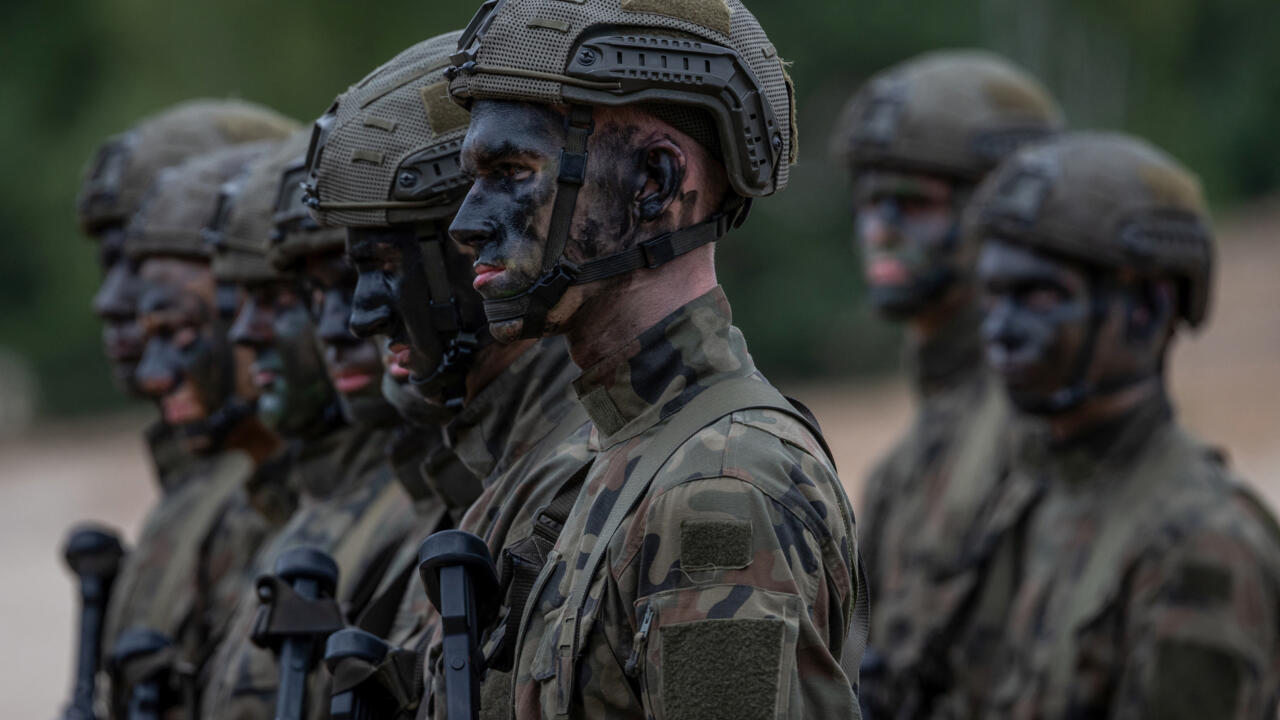
Poland: Since 2024, it has implemented a one-month basic voluntary military training programme, which can be followed by up to nine to 11 months of specialised training for those wishing to join the active army.
Romania: Intends to bring in a four-month voluntary service programme in 2026, with an option to continue.
Belgium: The country is aiming for 1,000 voluntary recruits per year, although the debate on reinstating compulsory service has not been entirely settled.
Germany: The debate on reinstating compulsory service has been the subject of intense negotiations. A bill is due to be voted on in December, but the ruling coalition has reached a compromise on voluntary military service to bolster an army facing a shortage of recruits. Starting in 2026, all 18-year-olds will receive a form with questions about their motivation and aptitudes. Responses are mandatory for men and optional for women. The goal is to recruit 20,000 volunteers by 2026.
Non-EU countries
Norway: Twelve months of military service, which is mandatory for women too, as of 2013.
Switzerland: Conscripts can choose between 18 weeks of mandatory training or a longer civilian service, with periods of service spread out over time. But this may change as the Swiss people will on 30 November vote on the possible replacement of this system with a civic service. The obligation could be extended to women and could be carried out not just in the army or civil defence, but in working in environmental protection or helping vulnerable people.
United Kingdom: Former prime minister Rishi Sunak had expressed support for the re-establishment of compulsory national service, abolished in the UK since 1960. The project was championed by the Conservatives during the last election campaign, but has since been buried by the current left-wing Labour government under Prime Minister Keir Starmer.
This article is based on a report by Aurore Lartigue.
The original article: belongs to RFI – All the news from France, Europe, Africa and the rest of the world. .