Echoes of Genocide: A haunting tale of inherited trauma
Source: NEOS KOSMOS
What does trauma look like? How does it seep into the next generation and then the next, its power lingering until it becomes a part of a culture’s identity?
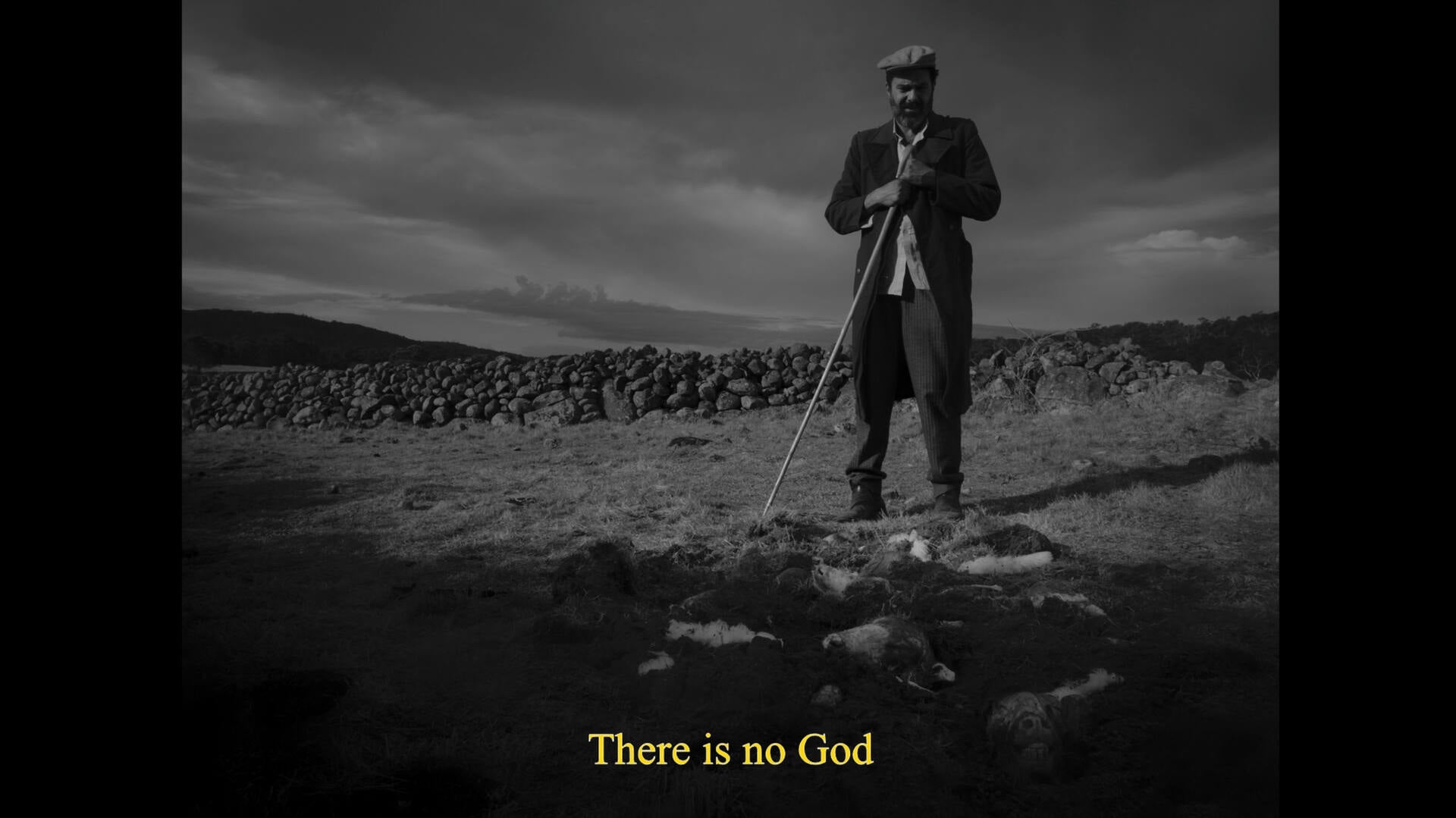
This is what Matthew Keisoglu, a multi-award-winning Armenian-Australian filmmaker and the great-grandson of an Armenian genocide survivor, explores in his short horror film, When Dogs Bark, which premiered earlier this year at CinefestOZ 2025.
Two Greek Australian actors, Evangelos Arabatzis and Carlos Sadiqzai, are the lead actors in this stark black-and-white haunting film. Even though the film is presented in Greek, Keisoglu explains that it is a story that transcends language.
“I wanted to explore genocide through a universal lens. The film is in Greek because our actors are of Greek backgrounds, but the team behind the work are Armenian, Persian,” he says. “I don’t want it to be specific. It is not about the Armenian Genocide and the Turks specifically. It’s about the universality of what a genocide looks like. And I’m not blaming anyone or saying that this culture is wrong or bad. It’s more about what the victim is going through and how they deal with it.”

Finding the perfect cast
His lead actors, got exactly what he wanted to convey.
“Ange (Evangelos Arabatzis) is very unique to me. For the audition we had tapes from people of Italian, Iranian and Greek descent. I remember when I heard the tape of what Ange put forward, I was star-struck by this sort of poetic silence and this grief he portrayed. And I knew then this is the guy. I didn’t want to even look any further.”
“And we spoke about the generational kind of grief, that Greek people carry, along with Armenians—we’ve got a very long shared history as friends and cultures. I remember this one conversation we had about how dirt and soil are very prominent in the film. And he told me about going back to Greece, when he had this moment where he put his hands into the soil and it was as if he could feel his ancestors, the kind of weight of the people on the land.”
“And that’s something that we could connect with, that connection to the past. And Carlos as well. Carlos is fantastic. He’s half Greek, and he really melded into the role of this kind of really innocent, somewhat ignorant son that isn’t really accustomed to the world that his father is in.”
“I wrote that role for me, or of me looking at how this whole world of operates. And it was fantastic that they were so brilliant together. It makes me want to turn this into a theatre play with the two of them, because we utilized a lot of theatre techniques.”

The plot
When Dogs Bark opens in the aftermath of a slaughter. In a farmland sheep pen, a widowed farmer discovers the mutilated remains of his lambs. From the wind comes the sound of wild dogs—sniffing, digging, chewing—and with them, the echo of genocide. Boots marching, shovels striking earth, children screaming. Memories resurface of a forest years ago, where a young child hid among the bodies as a pack of dogs dragged his mother away.
That child grows into the Son, an intellectual who has long since left the shack for the city. Called home after the slaughter, he finds his Father consumed by fear that the past is returning.
The captivating short film unfolds between the Father’s obsessive listening and the Son’s detached dismissal. Crucifixes, family photographs, mass graves, and pomegranates surround them as the sounds of owls, wind, soldiers, and dogs fill the silence. The Father hears soldiers approaching, dogs tearing at flesh, voices calling from the darkness. The Son hears only farmland. Through sound, the film reveals how repression mutates, how echoes persist, and how the past returns in forms that cannot be ignored.

Creating a universal space
The setting of this film is reminiscent of a mountain shack in Greece or Turkey, but it could be anywhere, Keisoglu continues.
“We shot When Dogs Bark up at the Macedon Ranges. We were looking for a place that felt like the Mediterranean, the Middle East, but we didn’t want it to be specific. It’s really up to how the audience perceive it, because I wanted to keep that kind of universality to it. Our actors, Ange and Carlos, really melded into the whole space.”
The name ‘When Dogs Bark’ was inspired by the film ‘Shooting Dogs’, which is about the Rwandan genocide and how soldiers would have to shoot dogs to stop them from eating the bodies of the dead in the Rwandan genocide. “Maybe people from Rwanda might watch the film and have some understanding of that. But the idea of barking dogs and soldiers is just prevalent across all genocides. The film is in Greek, but that’s simply because the actors are Greek. And I chose the best actors for the role. If they weren’t Greek, if they were Persian, boom, they’d be speaking Persian.”

Personal and universal trauma
The Armenian Australian filmmaker was shaped by the stories of the Armenian genocide of 1915, and hence this film was written through that lens.
“But it was also written in the space for what’s happening in Ukraine and what’s happening in Palestine and Gaza. It’s looking at the idea of genocides and historical traumas and the way that these things effectively repress and linger, and how they sit with the people for generations.”
People that suffer from these historical traumas become entrenched and are unable to move forward, he continues. “They’re stuck in this kind of enchained memory of destruction and annihilation. This film could resonate with the Greek Cypriots, or people that have experienced the Holocaust. These war traumas, they’re universal.”
“The fact is that the people who have lived through a genocide, they never speak of it,” Keisoglu continues. “My great grandfather never mentioned it. By not talking about it, they never got the chance to address it, and this impacts the second generation. And it’s usually the third and the fourth who try to find a way to fix it.”
When asked which communities in Australia are still processing their trauma, Keisoglu turns introspective. “My Armenian community. We are still very much stuck in trauma. And I think because of that, it’s kind of become a part of our identity. And I always wonder if we’ll ever shake that. But then I think to myself, if we do shake that, who do we become? Does it make us weaker? Does it make us stronger? How do these things linger, and if trauma is healed, what does that make the community? Is it healed, or have we lost that part of our identity that connects us?”

The endless cycle
Looking at the world today, Keisoglu sees the endless cycle of war, violence, displacement and hatred that persists. “It all seems generational.”
“Whether you look at the Neo Nazis marching on the street in Australia, it goes all the way back down to World War II. Or Palestine and Israel, it’s this fight that’s been going on since the death of Christ… and will continue for generations and years to come.”
He’s quick to clarify his perspective. “I hate no one. There’s no animosity because of what happened to my ancestors more than 100 years ago. None of that matters to me anymore. It’s in the past.” But he questions why we allow historical trauma to define our identities. The problem, he explains, is that trauma is repressive. It sticks and it festers, if left unspoken. Yet talking about it isn’t simple either.
“Can you even have a dialogue when these dogmas still exist? It sounds ridiculous to say, but can’t we all just get along? I don’t have the answers, but I just think it would make more sense than just doing what we’ve been doing for thousands of years, where violence has been the only answer.”
Cinema as testimony
A professor of mine once said how cinema is used as testimony, both for the voiceless but also for those who can speak, Keisoglu reflects. “So it’s looking at how cinema can explore things for victims, but also for people that don’t understand it. With my work, I always look at cultural stories, and then I mix that alongside horror artefacts, things that allow for a more digestible form for audiences and people to kind of recognise. Because trauma and cultural trauma, they’re recognisable, of course, but I find that through my love of this genre, these things become a bit more digestible and easily understood.”
This philosophy is one of the main reasons Keisoglu founded the Multicultural Mental Health Film Festival two years ago. The very fabric of Australia is made up of so many migrants and refugees who have lived through genocide and war and cannot speak of it, or have not processed it. The festival, supported by the Mental Health Foundation Australia, which Keisoglu runs on a volunteer basis with an entirely volunteer team, showcases diverse stories.
“It’s not just the multicultural aspect of the festival, it’s mental health, and those two are intertwined. And I think if we look at the mental health aspect of what’s going on in our society, we’ll come to understand a lot of problems and causes into the things that are wrong or that are not perhaps working in our society,” Keisoglu explains.
“This year we have films about Asian diaspora and identity, dementia, and body dysmorphia for example,” he says. “When people think of multiculturalism, it’s everyone. Everyone’s got their own lived experiences and identities, and that’s why the films themselves are so different. Some are funny, some are strange, some are scary, but they discuss issues that need to be spoken about. And cinema is one way to do it, because you get people to watch, and they go, ‘Yeah, I know that. That’s me.”
The festival has a partnership with Channel 31, and the selected films are broadcast there for people to view after the festival.
*When Dogs Bark was co-written by Matthew Keisoglu and Ramin Iranfar and produced by Iranfar and Lawrence Phelan, with cinematography by Scott Pope.
The original article: belongs to NEOS KOSMOS .