European Commission issues map showing half the Aegean as Turkish – prompting Greek protes
Source: NEOS KOSMOS
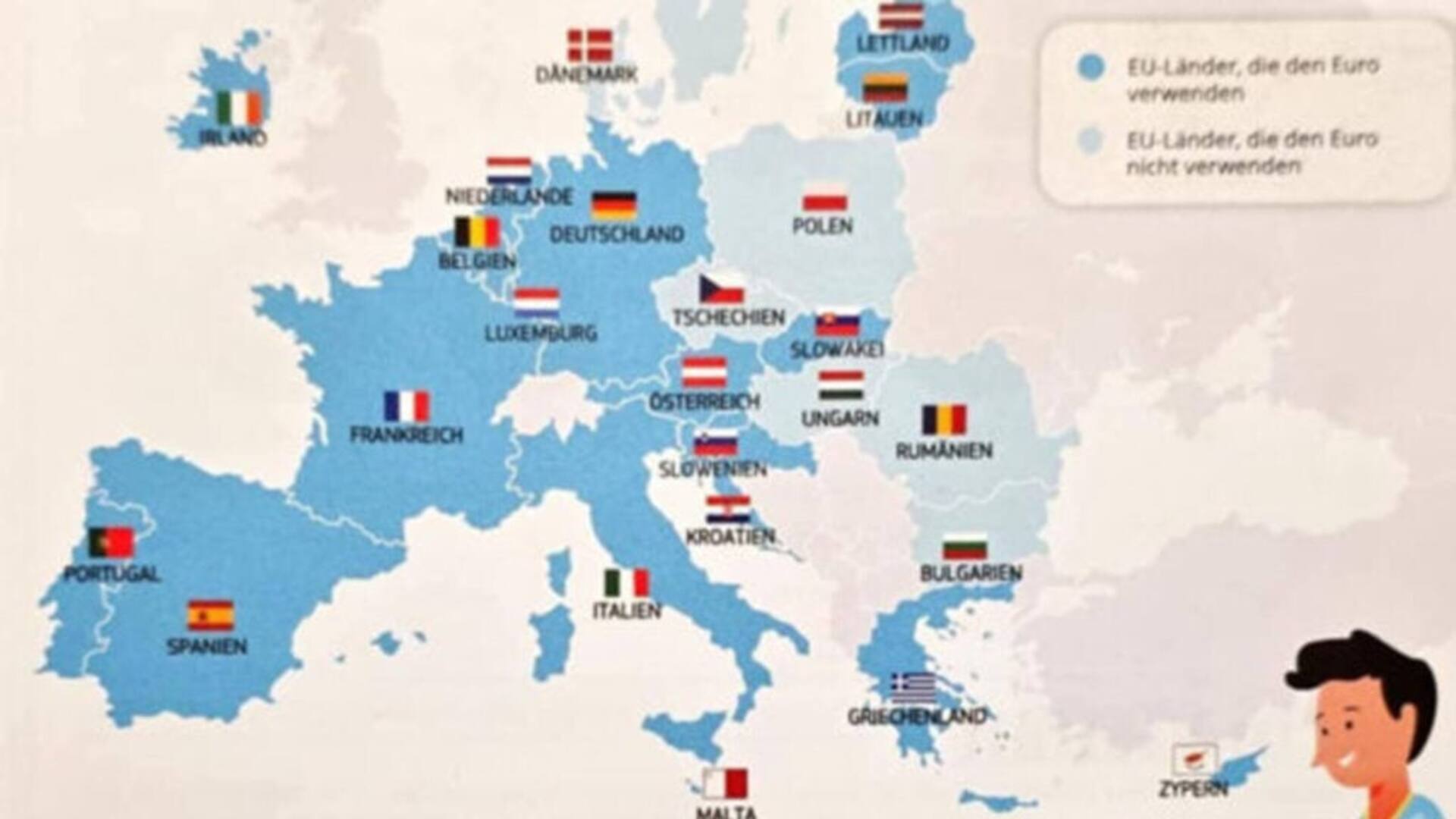
The European Commission has come under diplomatic fire after an official EU guide was found to include a map that visually depicted part of the Aegean Sea as belonging to a third country rather than Greece, sparking a swift protest from Athens.
The annual informational booklet “Discovering Europe” contained a controversial map in which the Greek islands of the Eastern Aegean and the Dodecanese were shaded in colors normally used for non-EU countries — effectively aligning them with Turkey instead of Greece.
The error was uncovered after Greek MEP Yiannis Maniatis (PASOK) shared the image publicly and lodged an official question with the Commission seeking explanations.
Following the discovery, the Greek Foreign Ministry, acting on instructions from Foreign Minister Giorgos Gerapetritis, instructed Greece’s Permanent Representation to the EU to file a strong diplomatic protest with Commission officials.
Dana Spinant, Director-General for Communication at the European Commission, acknowledged the mistake, issued an apology and said corrective steps will be taken to ensure similar errors do not happen again.
Athens demanded a full explanation for how the incorrect map was produced and approved, and asked for assurances that the editorial oversight of official EU materials would be strengthened.
In response to the Greek objections, the Commission immediately removed the digital version of the guide from its website and initiated a recall of printed copies distributed worldwide.
A corrected edition will only be republished once necessary changes are completed.
The problematic map appeared in the Commission’s December 2024 edition of “Discovering Europe,” which is printed in tens of thousands of copies each year. In this edition, the Greek islands were shown with colours intended for countries outside the European Union, raising concerns about quality control in the production of the material.
The incident has prompted questions in Athens about the European Commission’s review process for cartographic content in official publications. Greek officials stressed that because these materials are distributed globally and often used for educational purposes, even an unintentional mapping error can create misleading impressions about the borders and sovereign territory of EU member states.
While Brussels has pledged to correct the mistake and improve review procedures, Greece said it will continue to monitor the situation, stressing that accuracy in representations of member states’ borders is both a matter of principle and of respect.
The original article: belongs to NEOS KOSMOS .