Greece: Three new migrant centers to be built in Crete as part of migration bill
Source: InfoMigrants: reliable and verified news for migrants – InfoMigrants
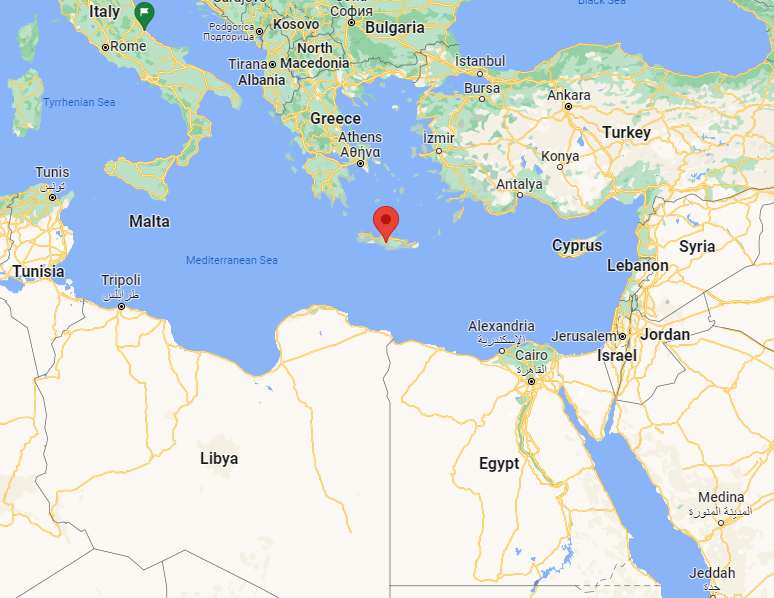
The Greek government has announced plans to build three new migration facilities on the southern island of Crete after record numbers of migrants arrived there in the summer of 2025. Migration Minister Thanos Plevris meanwhile hopes to introduce a series of other measures to control migration to the southern EU nation later this week as well.
During parliamentary proceedings at the start of February, Greek Migration Minister Thanos Plevris introduced an amendment to the country’s migration bill — which will be voted on later in the week and is widely expected to pass — which will see the creation of three new migration centers on Crete.
One of the three planned will be a permanent structure on what is Greece’s largest island, with two additional temporary migrant detention centers slated also be built in the capital Heraklion and the town of Chania. There have been no opening dates announced to date.
Plevris said the aim of the building the new structures was to get a grip on increased migration movements to the island as witnessed in the course of 2025, when record numbers of migrant boat arrivals where logged on the island and its small sister island of Gavdos.
Read Also
Detention and fines at core of Greece’s new migration law
Plevris explained the necessity for a shift in policy in Crete by highlighting a major change in migration movements that became evident in 2025: While up to 2024, nearly 80 percent of migrants tended to arrive on smaller Greek islands in the Aegean Sea after departing from Turkey — with only 8 percent actually arriving in the southern island of Crete, the number of arrival in Crete had shot up in 2025 to making up almost half of all migrant arrival on Greek soil.
Nearly all people who arrive on Crete using irregular means of migration depart from the coast of Libya, overwhelming towns throughout Crete and the resources available to take care of migrants.
To get on top of the situation, Greece even opted to stop the processing of asylum claims in all cases related to Crete for three months in the summer of 2025, attracting criticism from various human rights groups with allegations of deliberately leaving migrants in a state of legal limbo.
Authorities in Crete have resumed processing the backlog of cases, but have yet to get to every outstanding application from 2025.
Read Also
Greece to toughen sanctions against migrant smuggling
Migrant detention as a deterrent
Plevris also said that the facilities would be built with the intention of deterring others from coming to Greece, in particular those who would have no legal basis to be granted asylum.
To this end, Plevris plans to hold migrants whose asylum claims are assessed as unlikely to succeed in administrative detention for the entire period of the review of their applications.
Read Also
‘Detention or return’: Greece moves to imprison those who don’t voluntarily leave
Under the migration bill that is expected to be passed later in the week, migrants whose asylum claims are rejected will promptly be returned to their home countries or potentially to third countries under new EU plans to erect return hubs outside the bloc.
Plevris has recently expressed interest in building such facilities at hitherto unspecified locations in North Africa, with Germany planning to serve as a main facilitator of the plan.
Read Also
Greece wants to work with Germany in building third-country migrant centers in Africa
Greece intensifies partnership with Libya
In addition to fleshing out details and amendments for the upcoming migration bill, Plevris also explained that Greece was in talks with the governments of Egypt, Bangladesh and Pakistan to work together more closely on deportation as well as voluntary returns.
He added that the International Organization for Migration (IOM) and the United Nations High Commissioner for Refugees (UNHCR) were also being consulted as partners of the scheme.

He further noted that Greece had improved its cooperation with the Turkish coast guard and also various Libyan authorities to reduce migrant arrivals; in the case of Libya, Greece has actually intensified its cooperation not only with the internationally recognized Libyan Government of National Unity in the capital Tripoli during the past year, but also with the unrecognized administration of eastern Libya based in Tobruk.
Read Also
EU-Africa migration policy shift: Cooperation or coersion?
The original article: belongs to InfoMigrants: reliable and verified news for migrants – InfoMigrants .