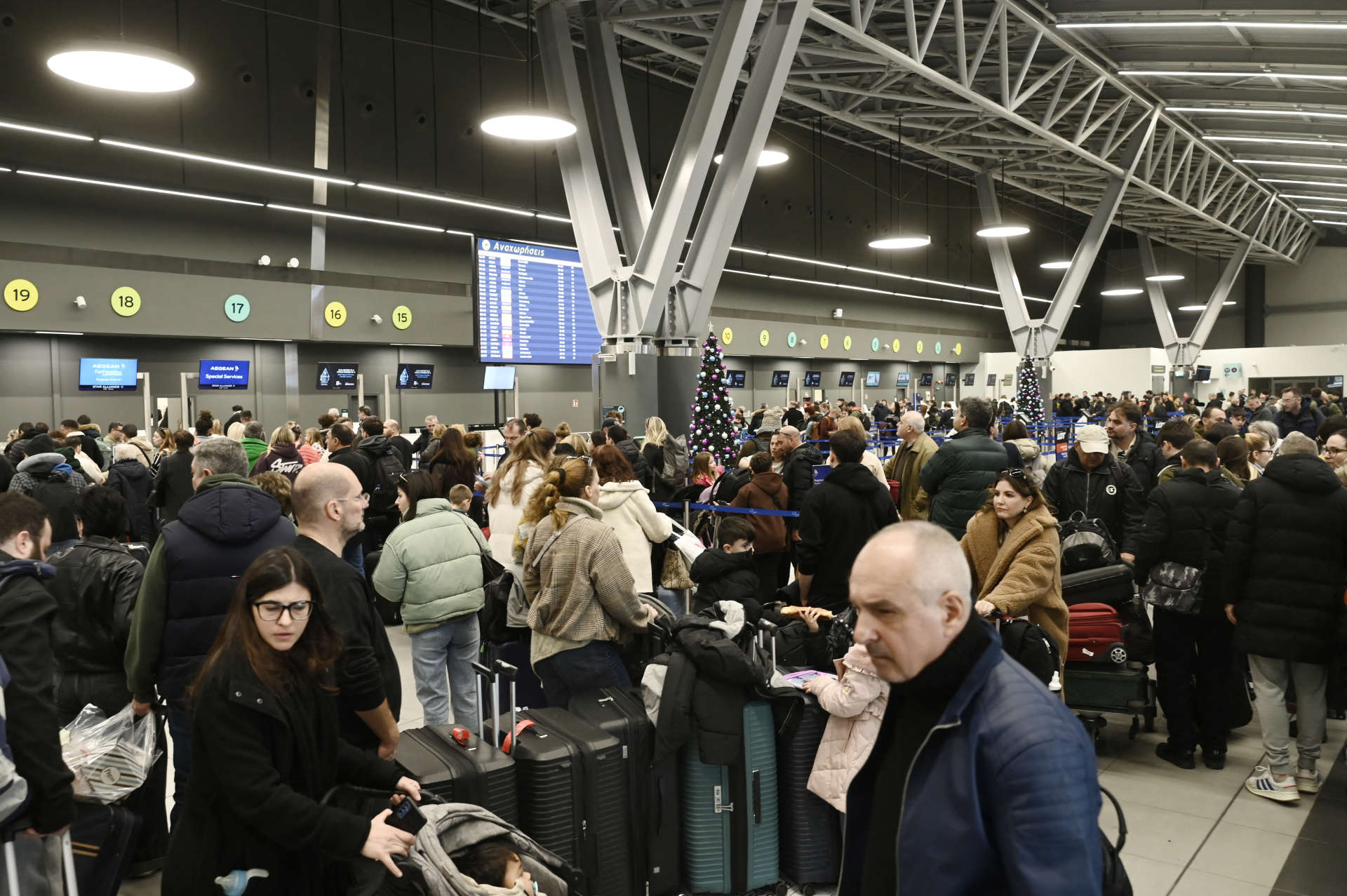
Greek aviation chief quits over Jan. 4 airspace blackout
Source: NEOS KOSMOS
Greece’s transport ministry said Wednesday that its civil aviation chief had quit over the embarrassing January 4 airspace blackout that snarled flights for hours.
“The governor of the Civil Aviation Authority (YPA), George Saounatsos, submitted his resignation to the Minister of Infrastructure and Transport, Christos Dimas,” the ministry said in a statement.
The move came hours after an official report into the incident blamed the glitch on “obsolete technology” at Athens International Airport, one of the world’s top travel destinations.
“The current voice communications system… as well as critical telecommunications infrastructure… rely on obsolete technology,” noted the report by an investigative committee, which included a representative of the European Organisation for the Safety of Air Navigation (EUROCONTROL).
According to YPA, the malfunction began at 8:59 am (0659 GMT) on January 4 when multiple radio frequencies serving Athens airspace were hit by continuous “noise” interference.
The agency’s transmitters began sending out “involuntary signal emissions”, YPA said.
Hundreds of flights had to be diverted to neighbouring countries, with thousands of travellers hit. YPA said at the time that the problem was “unprecedented”.
The report issued late Tuesday classified the incident as low-risk.
But a vice president of Greece’s air traffic controllers’ association, Olga Toki, on Wednesday called the incident “very troubling”, saying there was “no time to waste” in upgrading the necessary systems.
“Imagine seeing planes moving on the screen and being unable to speak, intervene and issue the necessary commands,” she said.
The glitch came just before the Epiphany, a major religious holiday in Greece.
Officials have insisted that Athens airspace was quickly cleared of traffic, and that flight safety was not compromised.
The system returned to full operation at 5:00 pm, with flights restored 45 minutes later, YPA said.
No signs of a cyberattack or intentional sabotage were detected, it added.
‘Outdated’ systems
The investigation report said the system was restored “following resynchronisation/restarts that took place after rerouting traffic on the backbone network”.
The committee stressed the need to “accelerate” the transition to VoIP (Voice over IP) technology and new voice and radio communication systems, and install nearly 500 new transceivers.
An infrastructure overhaul costing 300 million euros ($350 million) is already underway, which includes digital transmitters that will be delivered this year, according to YPA.
But Toki told state broadcaster ERT that integrating the new systems would require “no less than three years”.
The Athens airport tower radar dates from 1999, air traffic controllers note.
Greece’s junior transport minister admitted last week that the airport’s communications systems should have been upgraded “decades” earlier.
“These are systems we know are outdated,” Konstantinos Kyranakis told Action24 TV.
Last month the European Commission referred Greece to the EU Court of Justice for failing to put in place measures to design and publish performance-based navigation (PBN) procedures at Greek airports that should have been in place five years ago.
Athens International Airport handled nearly 34 million passengers last year, an increase of 6.7 percent over the previous year.
The original article: belongs to NEOS KOSMOS .