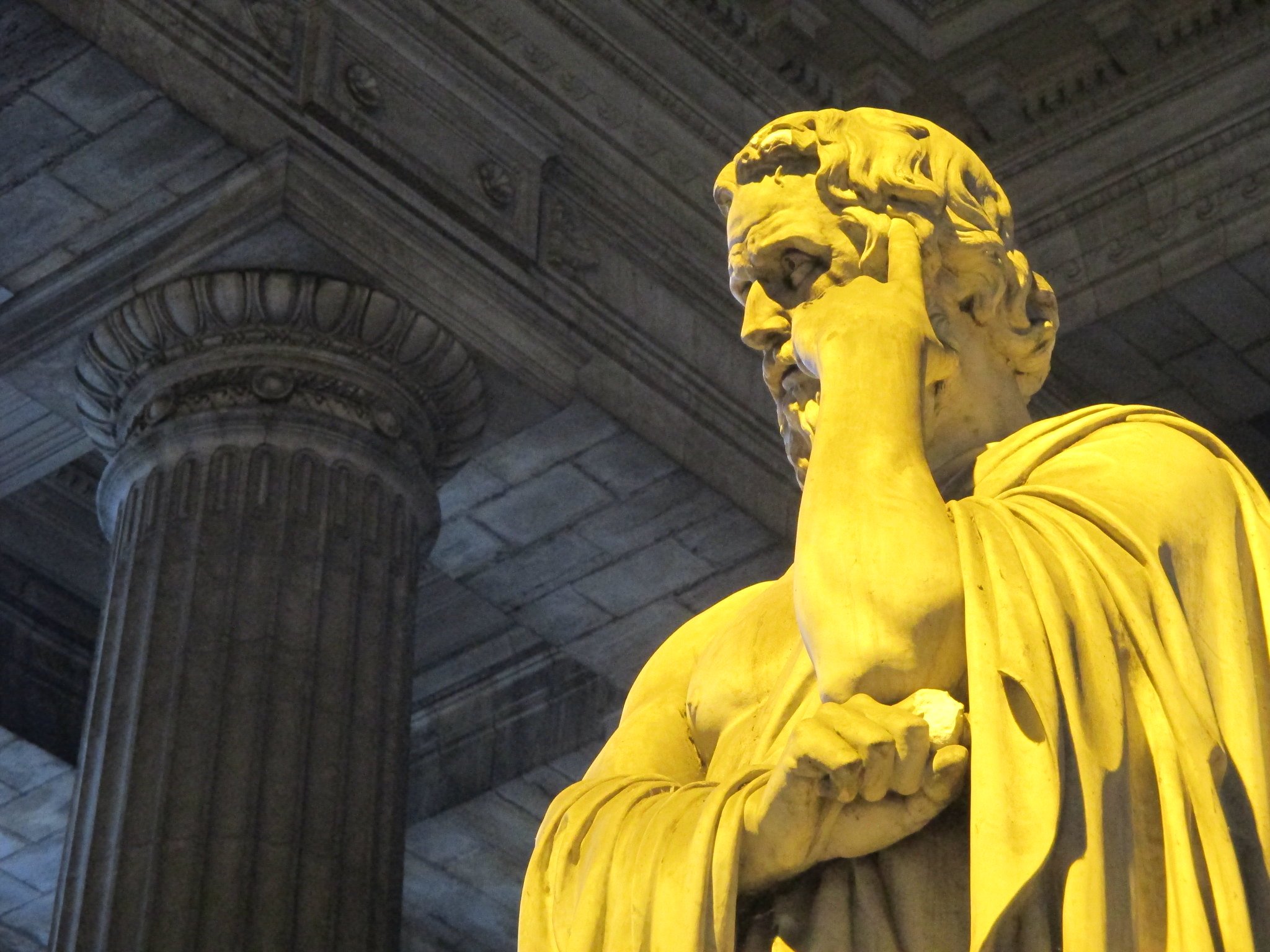
Lycurgus: The Ancient Greek Lawgiver Who Revolutionized Sparta
Source: GreekReporter.com

Lycurgus, the legendary ancient Greek lawgiver, transformed Sparta into one of history’s most disciplined and formidable city-states.
Revered as the architect of Spartan society, Lycurgus introduced a revolutionary set of laws that emphasized equality, military excellence, and frugality, reshaping the way Spartans lived, fought, and thrived. From radical land reforms to the rigorous upbringing of Spartan youth, his legacy forged a civilization admired and feared across the ancient world.
Life of the great lawgiver
According to prevailing tradition, Lycurgus lived around 800 BC. He served as the guardian of Charilaos, the nephew of the king of Sparta. He traveled widely, studying the organization of states in places such as Crete, Egypt, Ionia, Libya, the Iberian Peninsula and India. Upon returning to Sparta, he sought to reform the Spartan polity.
Lycurgus returned to Sparta enriched by knowledge and experience. His compatriots, recognizing his wisdom and ethics, entrusted him with drafting laws for their city. They followed these laws for centuries, bringing Sparta a unique glory. Notably, Lycurgus emphasized the importance of the education and development of children and youth in his legislation.
The Spartan lawgiver understood that individuals are shaped from a young age. While still children they acquire habits, knowledge, and values that stay with them throughout life. Consequently, he decreed that children be raised with discipline, practice temperance and self-control, and engage in physical training to ensure they grew up healthy and strong.
At the age of seven, all children left their parental homes. They were placed under the care of appointed guardians responsible for their upbringing. The children lived in “special camps.” They exercised, studied the works of Homer (such as the Iliad and the Odyssey) and learned dances and songs. They practiced the art of war, and trained to survive under harsh conditions. Above all, the Spartans taught them that love of country was paramount, superior to all other attachments. Children were also taught that it was an honor and a source of pride to die gloriously for Sparta. Conversely, cowardice in battle and abandoning one’s weapons were viewed as the greatest shame.
Spartan virtues: Equality, military prowess, and frugality
All of his reforms addressed the three Spartan virtues: equality (among citizens), military prowess, and frugality. As ancient Greek historian Xenophon mentions:
“Lycurgus, unlike the other Greeks, established different laws in Sparta. In other cities, everyone strives to accumulate as much wealth as possible. Some own land, others own ships, some become merchants, and others make a living by practicing a craft. In contrast, in Sparta, Lycurgus forbade free citizens from engaging in activities that accumulate wealth and designated as their exclusive focus those actions that ensure the city’s freedom.
“Indeed, why should one care about wealth in a place where, by establishing equality in food and lifestyle in general, Lycurgus fostered the notion of not being driven by the desire for wealth for the sake of indulgence? Nor should they gather money to buy expensive clothes, as they do not take pride in luxurious attire but in the health and vigor of their bodies.”

The legislation
Lycurgus created the Senate (Gerousia) composed of 28 elders. He continued the system of two kings, and founded a kind of assembly of citizens known as the Apella. Later, the Spartans introduced the oligarchic institution of the Ephors to oversee justice.
In the economic sector, Lycurgus redistributed the land into equal and permanent lots. He prohibited the minting of gold and silver coins and allowed only iron coins, which were heavy, unwieldy, and of little value. As Plutarch mentions:
“A second, and a very bold political measure of Lycurgus, is his redistribution of the land. For there was a dreadful inequality in this regard. The city had a lot of indigent and helpless people. A few people wholly concentrated the wealth in their hands. He wished, therefore, to banish insolence and envy and crime and luxury. Lycurgus also attempted to banish those yet more deep-seated and afflictive diseases of the state, poverty and wealth. He persuaded his fellow-citizens to make one parcel of all their territory and divide it up anew. Furthermore he also persuaded them to live with one another on a basis of entire uniformity and equality in the means of subsistence. They would seek preeminence through virtue alone, assuring them that there was no other difference or inequality between man and man than that of blame for base actions and praise for good ones.”
The impact of Aegospotami: the communal lifestyle of Lycurgus
By these measures, importing foreign products became impossible. However, after the Battle of Aegospotami, when Sparta reintroduced gold currency, greed and corruption emerged. The Spartans also banned professions deemed unnecessary, such as teachers of rhetoric, jewelers, diviners, and courtesans.
In their private lives, Lycurgus required citizens to live communally. They could use only basic tools like axes and saws to build simple huts, thus discouraging luxury. The men conducted marriages by abducting women, and they allowed only healthy and robust children to survive. They trained girls in athletic disciplines, such as running, wrestling, discus and javelin.

Economy and life
The character of the Spartan economy and way of life was rural. The estates were primarily cultivated by the native slave population, the Helots. These were assigned to specific pieces of land, and there was no trade in Helots. The Perioceans lived in the mountainous areas, and there was economic self-sufficiency based on slave labor, local products, and iron ore.
To establish his laws, Lycurgus followed and respected many of the existing traditions and institutions of the Spartans, such as the institution of dual kingship, which existed prior to his reforms, as well as the distribution of land—conquered by the Dorians—into lots. In addition, he divided the land of the Lacedaemonians into equal lots, ensuring that they were equal in productive efficiency. Most importantly, he made the land inalienable, meaning the owner could not sell the lot, as it belonged to the state of the Spartans.
Laws about women
Ancient Sparta during the classical period was a unique city-state. The freedom and social status of Spartan women began from birth. Sparta’s laws required female infants and children to receive the same care and upbringing as males, unlike other Greek cities. Girls in Sparta attended public school (for a shorter period than boys), and as Plato points out, the education was not purely physical: “It was not only the men but also the women who prided themselves on their spiritual cultivation.”
In Sparta, girls often exercised alongside boys, running, wrestling, and throwing the discus and javelin, often in the nude. Plutarch notes: “The nudity of maidens had nothing indecent, because it coexisted with shame and lacked any trace of indecency.”
The purpose of this training was to ensure that women developed strong bodies, so that they would bear strong children. Xenophon states: “Then he (Lycurgus) made the women, just like the men, compete with each other in running and endurance, believing that when both are strong, the children will grow stronger.”
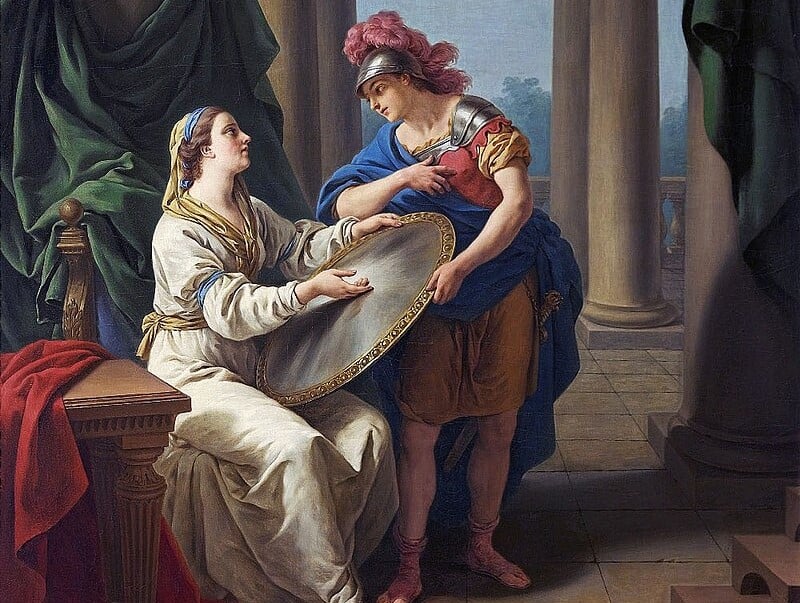
Sexual freedoms and economic power in Spartan society
Because Spartans would devote their lives to military and other public service, women were responsible for managing their husbands’ estates, putting them in control of the family wealth. This economic power contributed to the social rise of the Spartans.
In fact, ancient Greek philosopher Aristotle argued that “the Spartans were ruled by their wives.” When Gorgo (daughter of King Cleomenes I and wife of King Leonidas) was asked why the Spartans were the only women in Greece who ruled over their men, she replied: “Because we are the only women who give birth to (real) men.”
The sexual freedoms of Spartan women were also considerable, as there was no concept of adultery. Spartan women were free to have sexual relations with others, whether married or unmarried. In fact, during the Second Messinian War (668-685 BC), when their men were absent for many years, the Spartan women accepted the erotic advances of the Helots without any consequences to their reputation.
The children born from these relationships, known as Parthenians, were sent by the Spartans to found the colony of Taranto in Greater Greece (8th century BC). The state was unable to assimilate them to their fathers but also did not consider them equal to other Spartans. Finally, the husbands of Spartan women honored their wives with special monuments and inscriptions, just as they did for men who died on the battlefield.

The Clause of the lawgiver Lycurgus
The “Clause of Lycurgus the lawgiver,” which refers to all the laws he established, is a Republican principle where all powers emanate from the body of citizens (the Senate, the Appellate Court), and all goods are directed for their benefit. This principle was applied for the first time in Sparta.
The Great Clause of Lycurgus forged the ideal state. Lycurgus, in order to protect his countrymen and their families (while also seeking to preserve the Spartan army), implemented these measures to ensure their security. The legislator aimed to structure the city’s society so that daily life revolved around the pursuit of honor. The Spartan, guided by martial virtue, embarked on a long cycle of training that began at the age of seven.
Lycurgus, the lawgiver of Sparta, found himself in a difficult position when trying to impose his new laws on the state (the Great Clause), with the aim of ensuring that by the time a Spartan citizen reached the age of thirty, he would have full political rights. This would allow him, based on his worth, to claim any military or political office. By his twenties, a Spartan youth had graduated from the Academy of War. He would become a member of one of the most formidable armies the world had ever seen. Lycurgus’ main objective was to create good and virtuous citizens—brave ones—condemning softness and luxury. To achieve the desired result, the citizen must dedicate himself entirely to the Spartan way of life.
Discipline, eugenics, and the Spartan way of life
Lycurgus believed that someone engaged in any form of work could not, even if he wanted to, exercise his mind at the same time. Thus, work was undertaken by Helots, leaving Spartans free. Lycurgus also imposed the necessary discipline on the army to create a model military force. The Spartans considered hunting a very pleasant pastime. Lycurgus, believing in eugenics, required that the young men exercise. Young women in Sparta also followed a training program so that, in addition to the other benefits they had, they would give birth to healthy children. Lycurgus succeeded in instilling in the Spartans a sportsmanlike and heroic spirit.
Plutarch also adds:
“In times of war, too, they relaxed the severity of the young men’s discipline, permitting them to beautify their hair and adorn their arms and clothing, rejoicing to see them, like horses, prance and neigh in preparation for the contest. Therefore, they wore their hair long as soon as they ceased to be youths, and particularly in times of danger, they took care to keep it glossy and well-combed, remembering a certain saying of Lycurgus: that a fine head of hair made the handsome even more comely, and the ugly more terrifying.”
Death and legacy of Lycurgus the lawgiver
Plutarch writes that Lycurgus traveled to the oracle of Delphi to inquire whether the laws he had established were good and sufficient to ensure the city’s prosperity and virtue. According to the oracle, Apollo responded, affirming that the laws were indeed good. Lycurgus recorded this oracle and sent it back to Sparta.
Regarding his death, Plutarch says that Lycurgus the great lawgiver decided to die by abstaining from food.
“But for his own part, he sacrificed again to the god, took affectionate leave of his friends and his son, and resolved never to release his fellow-citizens from their oath, but, of his own accord, to put an end to his life where he was.
He had reached an age in which life was not yet a burden, and death no longer a terror; when he and his friends, moreover, appeared to be sufficiently prosperous and happy. He therefore abstained from food until he died, considering that even the death of a statesman should be of service to the state, and that the ending of his life should not be void of effect, but recognized as a virtuous deed.”
All historians agree that the system bearing the name of Lycurgus the lawgiver transformed Sparta. It changed the city from a primitive communal organization to the Spartan state which has been admired throughout the ages and continues to be to this day. Plato admired and applauded his laws, believing them to be of divine origin. Even several Stoic philosophers supported Lycurgus’ legislation.
The Spartans honored their great lawgiver Lycurgus as a demigod. They surrounded him with symbolic figures, and celebrated a special festival in his honor, the Lycurgeia.
The original article: belongs to GreekReporter.com .