
Supreme Court of Greece: If the father doesn’t pay child support, the grandparents will
Source: ProtoThema English
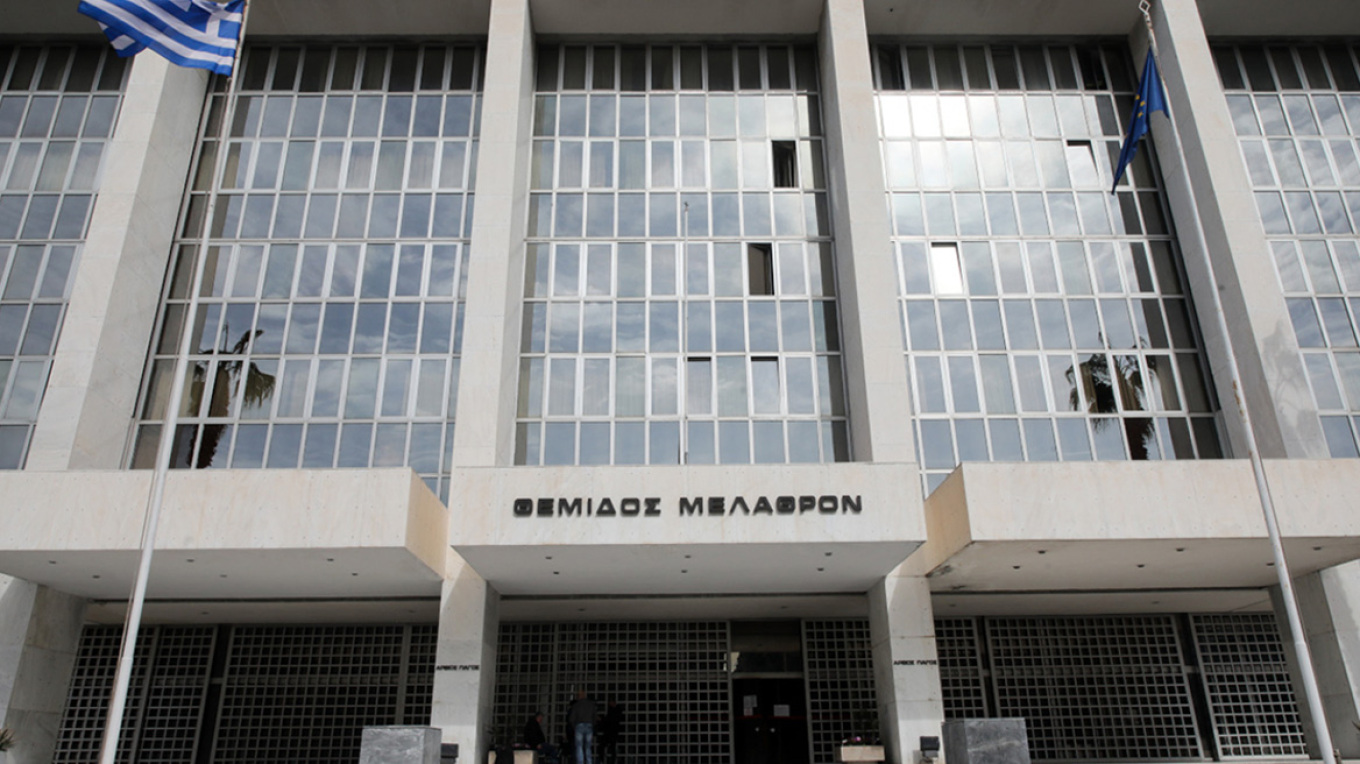
With a pioneering ruling, the Supreme Court of Greece ruled that if a divorced father fails to pay the amount of child support determined by the courts for his underage child, the obligation is transferred to the grandparents, who must then provide the child support amount.
The judges at the Supreme Court were faced with the paradox that although the paternal grandparents were financially well-off and owned substantial real estate, they still refused to pay the €280 monthly child support for their granddaughter. They even went so far as to appeal to the Supreme Court in order to overturn a Court of Appeals decision requiring them to pay this modest sum, which was minor in comparison to their financial capacity.
The case
In October 2005, the couple got married and six years later, in December 2011, they had a baby girl. Four years after that, their marriage was dissolved by court decision, which granted custody of the minor to the mother and simultaneously ruled that the father must pay monthly child support of €500 during the period 2015–2017. However, the father only paid the full €500 initially—up to February 2016—and then on his own initiative reduced the amount to €200 per month.
The former wife turned to the courts, which issued a payment order against the father for the amount of €4,774. But the mother was unable to proceed with forced execution, since her ex-husband had “no visible assets in Greece.”

The mother had been working in a tourism business prior to her daughter’s birth, with a monthly salary of €630 (including Christmas and Easter bonuses and holiday pay). The father, during their marriage, worked in the family business—technically registered in his mother’s name—and in 2016 he moved to Bulgaria, where he and his brother set up a similar business to the one operating in Greece.
In Bulgaria, according to the court decision, the father lives a life of luxury and owns expensive cars. He also participates in car rallies, which the court described as a “very expensive hobby” that requires substantial ongoing financial support. However, “he takes care to conceal or not declare his income under his own name.”
After the divorce, the mother and daughter moved in with the mother’s retired parents. Her father is a pensioner and her mother works as a cleaner. They have taken on all expenses for the daughter and granddaughter’s upkeep—food, clothing, and more.
The paternal grandfather is a pensioner receiving a monthly pension of €800 and earns another €1,056 per month from rental income. The paternal grandmother is the legal owner of the family business. According to their joint tax return for 2015, she declared gross income of €206,007.
They also have significant real estate. The grandfather owns six apartments (each under 100 square meters), 50% of a property measuring 806 square meters, a small share in another house, 33% of a 384-square-meter plot of land, and a car with a 3,500 cc engine. The grandmother owns the other 50% of the 806-square-meter property, two apartments of 135 and 70 square meters respectively, 50% of a 77-square-meter apartment, and another car.
The grandparents from the paternal side argued that the maternal grandparents could also contribute to the child’s support. They claimed that the mother’s father receives a €500 pension and that her mother earns €1,000 monthly cleaning houses, and therefore should be able to contribute as well.
The Thessaloniki Court of Appeals ruled that, according to the Greek Civil Code, in divorce cases where the financial means of even one parent are insufficient to cover the child’s needs, the obligation to provide support falls to the next ascendants in line—that is, the grandparents—who are jointly responsible for the child’s support in equal parts, to the extent the parents cannot meet their obligations.
The confirmation
The Supreme Court confirmed that, of the €560 established as the necessary child support amount, the father would contribute €200, the mother would contribute €80 based on her income, and the paternal grandparents must cover the remaining €280 (200+80+280).
The Supreme Court emphasized in its ruling that the father’s parents “are financially well-off, possessing substantial real estate and with total monthly income exceeding €2,000, whereas the maternal grandparents are unable to contribute to their granddaughter’s support due to their limited actual income.”
Ultimately, the A1 Civil Division of the Supreme Court rejected all arguments from the paternal grandparents seeking to annul the Court of Appeals’ decision.
Ask me anything
Explore related questions
The original article: belongs to ProtoThema English .

