The Garden of Eden and the Forbidden Fruit in Greek Mythology
Source: GreekReporter.com
The Garden of Eden appears in the Bible as the special garden that God created as Adam and Eve’s original home. This first human couple were forbidden from eating the fruit of one particular tree in the garden. Famously, they disobeyed God and ate it anyway. A version of this story, involving a special garden and forbidden fruit, also appears in Greek mythology, known as the Garden of the Hesperides.
The Garden of the Hesperides
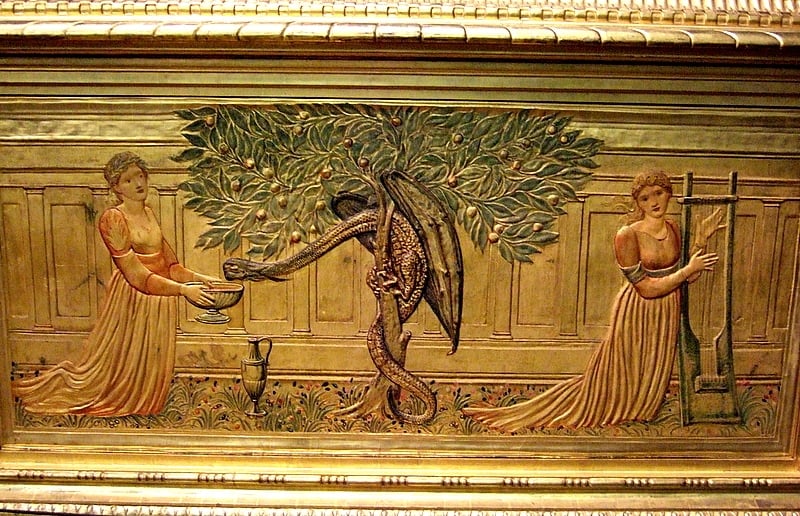
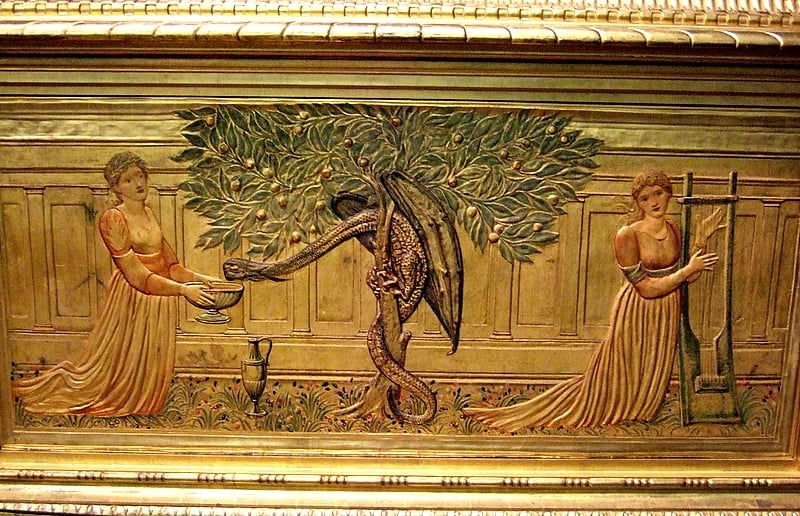
The Garden of Eden shares many similarities with the Garden of the Hesperides from Greek mythology. The Hesperides were a group of nymphs (a class of inferior female divinities) who represented the evening, the golden light of sunsets, and the far west. The ancient Greeks believed that they had a special garden in that direction.
Some records place it in the region of Atlas the Titan. Some believed that it was near the Atlas Mountains in North Africa. Pliny the Elder placed it in Morocco, while Strabo believed it was in Tartessos in the Iberian Peninsula.
In any case, the Garden of the Hesperides was the special orchard of the Greek goddess Hera. Records vary, but either a single tree or a grove grew there. The branches of this tree or this grove produced special golden apples unlike anything seen in nature.
The forbidden fruit
One of the key features of the story of the Garden of Eden from the Bible is that the fruit of one particular tree was forbidden. How does this connect to the legends from Greek mythology?
According to legend, when Zeus and Hera married, the different deities arrived with nuptial gifts for Hera. Among them was the goddess Gaia, the ancestral mother of all life, who presented branches bearing golden apples. Greatly admiring these, Hera begged Gaia to plant them in her gardens, and so she did.
Then Hera placed the Hesperides in her orchard to take care of it. However, they would occasionally pick the golden apples for themselves. Hera was greatly displeased with this since the apples were obviously very special.
Not trusting them, Hera also put a serpent named Ladon among the branches of the tree or grove. This guarded the golden apples of the Garden, preventing the Hesperides from taking any more.

Similarities between the Garden of Eden and the ancient Greek Garden of the Hesperides
From this overview of the Garden of the Hesperides and its forbidden fruit, let us consider how this matches the Garden of Eden in the Bible.
In both cases, the garden is a special place created by a divine being. In the Garden of Eden, it was the God of the Israelites, while in the Garden of the Hesperides, it was Gaia, the goddess of life, who created it.
Both gardens produced special, unique fruit. While the forbidden fruit in the Garden of Eden was apparently not physically unusual, it had a unique role and was the only fruit that was off limits to Adam and Eve. In the case of the Garden of the Hesperides, the fruit was special and was, like the Garden of Eden’s forbidden fruit, off limits.
Just as the Bible’s story presents Eve as disobeying God and taking the fruit anyway, Greek mythology presents the Hesperides as taking the fruit for themselves.
Finally, just as the Bible associates the forbidden fruit in the Garden of Eden with a special serpent, the forbidden fruit in the Garden of Hesperides was associated with Ladon the serpent.
While there are notable differences between the two accounts—such as Ladon’s role as a guardian rather than a tempter—the similarities between the two stories are striking. These commonalities suggest a shared cultural origin or influence, making it reasonable to conclude that both narratives may ultimately stem from related traditions.
The original article: belongs to GreekReporter.com .