The ‘mother’ of Greek dance in Australia
Source: NEOS KOSMOS
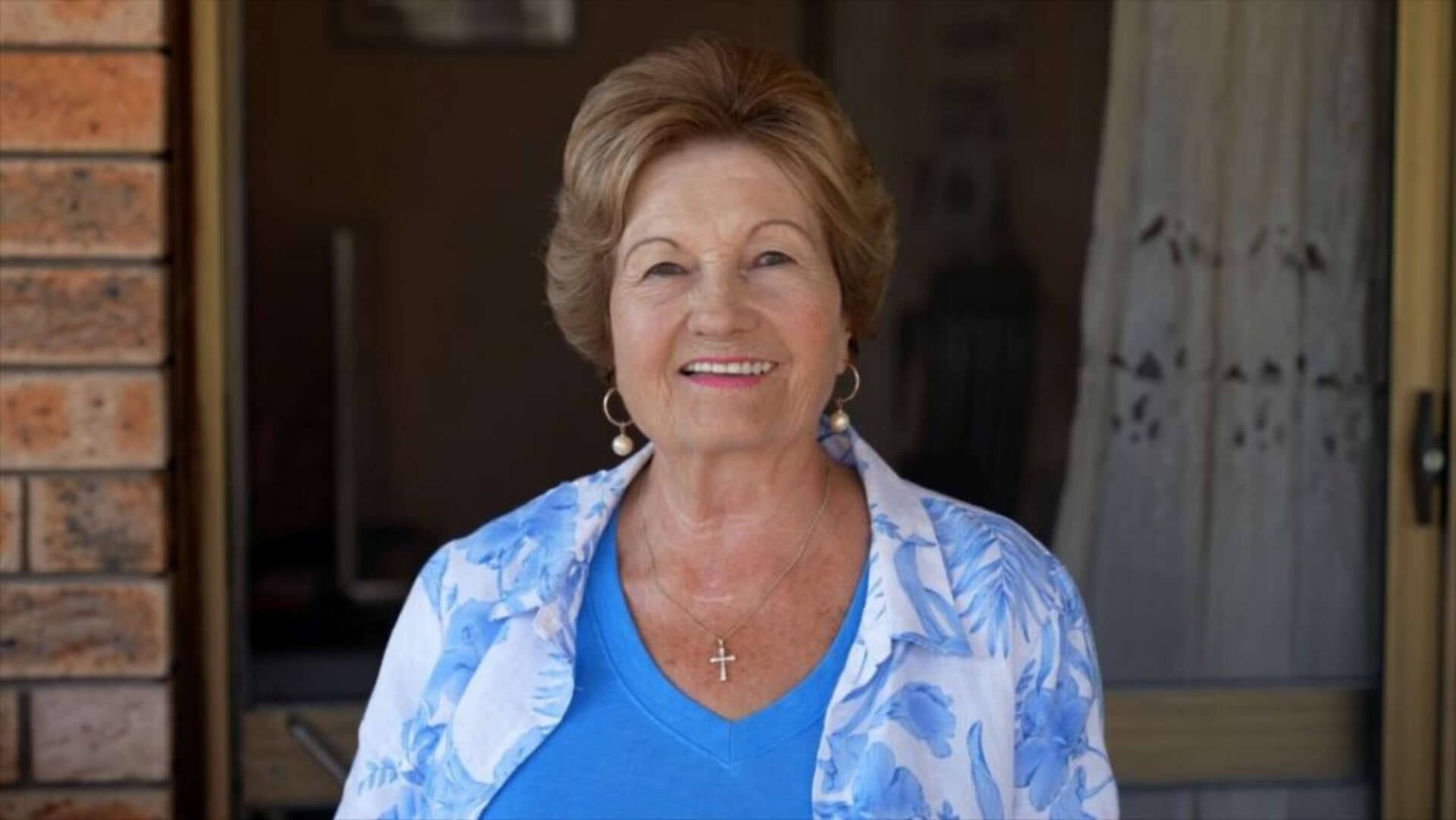
Sofia Vardava-Haska has been described as the mother of Dodecanese culture, with regard to the Rhodian diaspora in Australia.
Thousands of Greeks of the Fifth Epirus have been initiated into their ancestral dance tradition thanks to the passion of Roditissa.
Her first steps in life? She took them in Greece, under the “shadow” of war and refugee status.
But the future dance teacher proved to everyone – and above all to herself – that, many times, “greatness comes from the humblest of origins”…
The experiences of that period are recorded in her testimony, which is included in the digital archive of the OPTS platform, as part of the “Our People, Their Stories” program, an initiative of the Holy Archdiocese of Australia that serves as an oral history archive of first- and second-generation Greek immigrants’ stories.
Sofia Vardava-Haska was born in Rhodes in 1941. Her early years coincided with the war and population movements in the Dodecanese.
In this recording, she describes the conditions of the escape of families from Rhodes and the difficulties of the journey. The return to the island and the liberation of the Dodecanese are also part of the same narrative.
Sofia Vardava-Haska refers to the moment of raising the Greek flag in Mandraki with tears in her eyes, in the presence of a crowd of people. It is an image that she carries indelibly in her memory.
In the post-war years, dancing and singing became an organic part of her daily life. She participated in cultural activities in Rhodes and became acquainted with the Dodecanese wealth of traditional music.
In 1957, her family emigrated to Australia. The journey lasted forty-five days and marked the beginning of her life in the new country, as well as her integration into the Greek community.
Her first contact with dance teaching in Australia was through parish activities, where she helped teach children of the Greek diaspora.
From the early 1960s, this involvement took on a more permanent character. Organized dance classes were created, with regular presence at community events and celebrations.
In 1974 she founded her first dance school in the parish of All Saints in Sydney.
The response was immediate and within a short period of time the number of students increased significantly.
New schools and collaborations with parishes and cultural associations followed, forming a teaching network that covered a large part of the Greek community.
These schools became structures through which Greek dance was transmitted in a common way and consistently.
At the same time, dance groups that he taught or supervised participated in major cultural events of the Greek diaspora and appeared in central venues, such as the Sydney Opera House, as well as in international events such as the Olympic Games.
As evidenced by the OPTS archive, each dance was presented with information about its history. This practice formed a unified teaching method, which was also adopted by younger teachers.
Her contribution is also evident in the aftermath. Over the years, her students have taken on roles as dance teachers and cultural event leaders in Australia.
The result is the existence of a stable framework for the transmission of the Greek dance tradition, with recognizable characteristics and duration over time.
The journey of Sofia Vardava-Haska shows how the tradition of the Greek diaspora was preserved through organized work and personal dedication.
The recording of her testimony in the OPTS platform archive is part of the overall effort to rescue the memory of the Greek diaspora and illuminates the role of people who worked with love and passion, having a fixed point of reference in the homeland.
Greek traditional dance in Australia has gained continuity through this long-standing presence.
Sofia Vardava-Haska’s work remains connected to the preservation of the customs and traditions that accompany the Greek community, particularly at times such as Christmas, when memory, family, tradition and nostalgia for the homeland are most intense.
The OPTS initiative, implemented under the auspices of the Holy Archdiocese of Australia and Archbishop Makarios of Australia, contains testimonies, photographic material and life documents of first- and second-generation Greek immigrants and was designed to highlight experiences and practices that have shaped the history of the diaspora. The archive can be accessed via its website https://opts.org.au/.
The original article: belongs to NEOS KOSMOS .