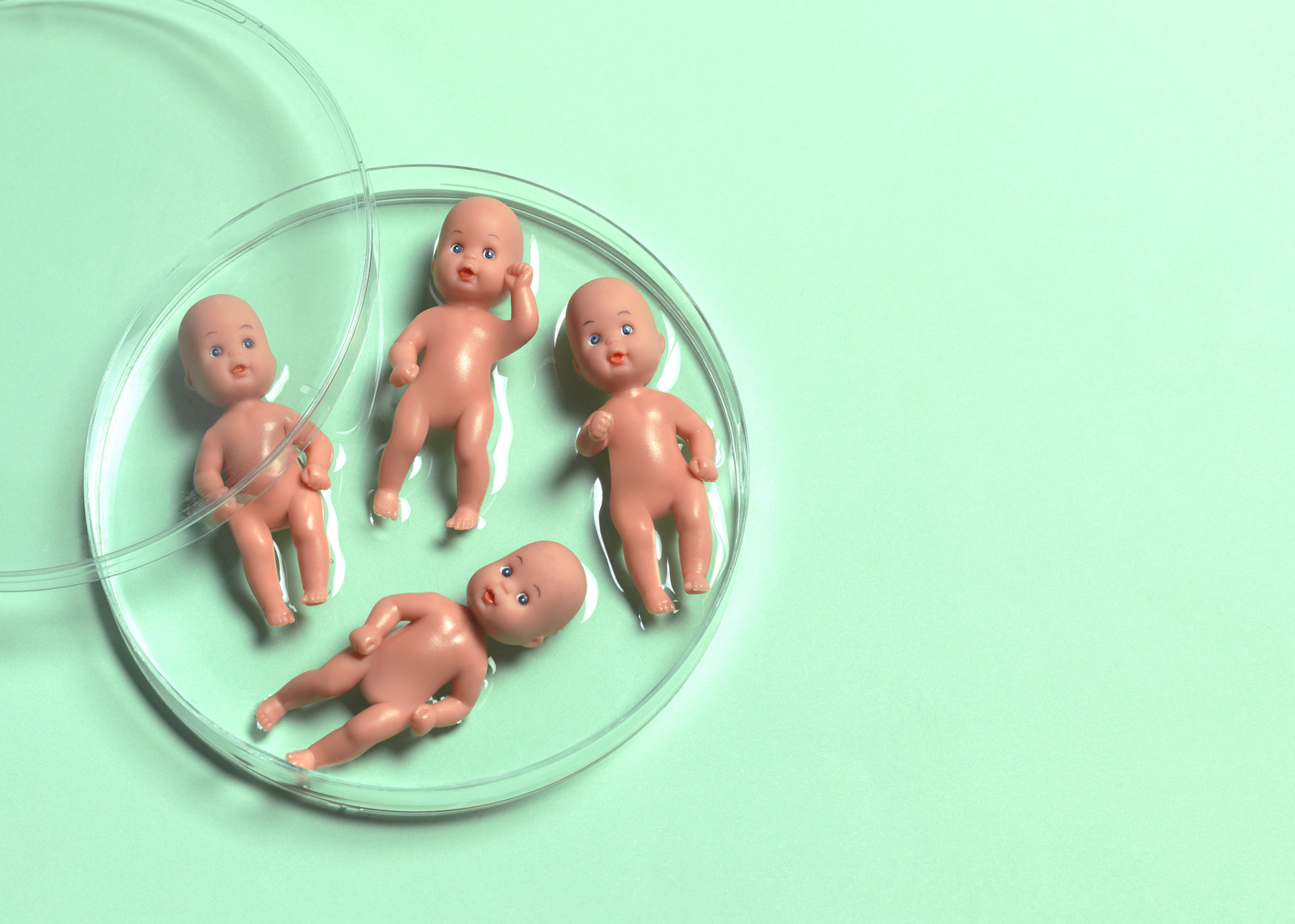
Why freezing your eggs doesn’t guarantee motherhood
Source: Euractiv
Freezing eggs isn’t as easy at the advertising pitch often suggests, leaving women considering postponing motherhood facing up to a process that is far more arduous than they had expected.
When Simone, which is not her real name, turned 34, the long-term relationship which she was in had just ended. The Belgium-based French IT freelancer was unsure whether she wanted children, but she knew she wanted to have the option later.
“I wished for that insurance,” she said.
Despite often marketed as a form of empowerment to postpone motherhood, egg freezing is a challenging process that offers no guarantees and can involve both physical and emotional strain. Uncertainty remains, even after eggs are “successfully” frozen for future use, while rules and costs vary widely across the EU.
While Simone chose so-called social egg freezing – where women freeze their eggs without a medical reason to do so – others undergo the procedure to preserve fertility ahead of aggressive illnesses or treatments such as cancer. The procedure is the same: a fertility test, hormone injection treatment, ultrasound scans and surgery to extract eggs for freezing.
A study of 1,131 women with an average age of 31 published in January 2025 found that interest in egg freezing was highest among single, childless, highly educated women. Interest in the procedure rose with age, the study found.
Simone is part of a growing number of women trying to safeguard their reproductive future by freezing eggs for potential in vitro fertilisation later on. In her circle of friends, she says, egg freezing is widely discussed and there is a growing awareness that both egg quality and quantity decline with age.
While comprehensive EU data is lacking, medical literature cites roughly 60,000 procedures in Europe over recent decades. Many fertility clinics also offer egg freezing, often pitched as an act of empowerment for modern women: “Your life, your pace. Egg freezing is a proactive choice – not a compromise,” says one of the clinics.
The first time Simone heard about egg freezing was in her 20s, when her mother suggested it as a birthday gift – a way to keep her options open. But back then, motherhood felt distant. A decade later, she consulted a French hospital, where an initial hormone test assessed her ovarian reserve – indicating the ovary’s capacity to provide eggs capable of fertilisation.
The results were devastating. Her reserve was so low that doctors placed her on an “urgent preservation pathway”, normally used for patients with medical issues, such as those preparing for chemotherapy.
“It was terrible news,” she said. Doctors told her that retrieving fewer than ten eggs meant sharply reduced odds of success, as eggs can be lost during extraction, freezing, storage, thawing and fertilisation, and even then, not all embryos implant successfully.
To proceed with an operation to extract eggs and freeze them, at least three viable ones should be available.
“I had only three eggs, and one of them was too big,” Simone described her first failed attempt. That was when she realised how unpredictable the process can be, even for younger women.
Three decades of freezing
The first pregnancy from a frozen egg was reported in 1986, but success rates remained low until the 2000s, when vitrification – a flash-freezing technique – significantly improved egg survival.
Egg freezing first gained popularity in the US. It took off in 2014, when companies like Apple and Facebook began offering the procedure to employees. Celebrities such as reality star Kourtney Kardashian, who underwent the treatment at 39, also helped raise awareness.
Demand then spread across Europe, where some employers – such as German pharmaceutical company Merck – now offer to cover part of the cost for employees.
Despite scientific advances, doctors stress that the procedure still carries significant uncertainty for a possible future pregnancy. “On average, about 85% of frozen eggs survive the thawing process”, Michel De Vos, medical director for Fertility Diagnostics and Treatment at Brussels University Hospital, said of the survival rate in his clinic.
However, for women freezing eggs at 35–37, about ten thawed eggs provide roughly a 50% chance of birth, he added.

“Egg freezing is never an insurance. We cannot reach a 100% success rate, but freezing does increase the chances of a future pregnancy, especially when women use the eggs after the age of 40,” said De Vos.
When Simone’s doctor cancelled her retrieval operation 24 hours before it was due to take place because of her low egg count, Simone says that she was “sad and mad”. She immediately started a second attempt, reassured by the doctor that better results with around ten eggs are possible.
Daily hormone injections – to support egg production – began again.
“I felt like I was putting poison into my body,” Simone said, describing experiences shared by many women who underwent the same hormonal treatment, even though the amount and duration depend on the individual.
Her belly was swollen, she looked pregnant, and the hormonal drop afterwards left her mentally exhausted. De Vos noted that physical discomfort, hormonal swings and emotional strain are among the most challenging aspects of the process.
Simone’s second attempt was even more disappointing – only two eggs were retrieved, and the previously oversized egg had developed into a cyst, blocking one ovary entirely. “It was a nightmare. I went through everything again, for nothing.”
Although her French health insurance covered most of the expenses, she still paid about €1,000 for two attempts. Despite the cost and two failed attempts, Simone hasn’t given up and began a third in November.
One union, many rules
Egg freezing – be it for social or medical reasons – remains unevenly regulated across the EU.
Hungary, Lithuania, Malta and Slovenia do not allow social egg freezing. Other countries – such as Spain, Czechia, Latvia, Denmark, and Germany – do, but requirements vary. Greece and Portugal have emerged as popular destinations for egg freezing, in part because costs for the procedure are lower.
In Czechia and Greece, social egg freezing costs around €2,300, including one year of storage but excluding medication, while a similar service costs about €3,000 in Spain.
Medical egg freezing is strictly regulated and generally reimbursed, though rules vary across member states.
Austria will allow women to freeze their eggs for personal reasons from 2027 on, after the country’s highest court ruled that the previous ban violated reproductive rights.
In Belgium, women must pay the full cost themselves for social egg freezing – on average around €5,000, depending on hormonal needs, which is the most expensive part.
Marie, which is not her real name, is a 32-year-old German sociology professor and underwent the procedure in Belgium. She paid €2,700. “I was lucky because I didn’t need that many hormones, because the better your egg count prediction is, the fewer hormones you need,” she said.
In Germany, Marie would have paid far more: €2,300 to €4,000 for the procedure, up to €1,800 for medication and as much as €600 per year for storage.
The topic of egg freezing first came up for Marie when her gynaecologist asked if she would consider having children when she was 28, and again at 30.
“Suddenly I felt old,” she recalled. Yet at the fertility clinic, doctors told her she was still “young for egg freezing”, even though she postponed the procedure for a year to finish her doctorate, then began at 31.
After completing the procedure, four of her eggs were frozen. Doctors advised her to repeat the process to improve her chances to have more eggs – but she decided not to, citing disappointment, along with the intensity and cost of the treatment.
“I’ll see where life takes me in the next two or three years. Maybe I’ll try again at 35, or I’ll stop thinking about children altogether, or maybe I’ll become pregnant naturally,” she said.

(bms, cs, vib)
The original article: belongs to Euractiv .